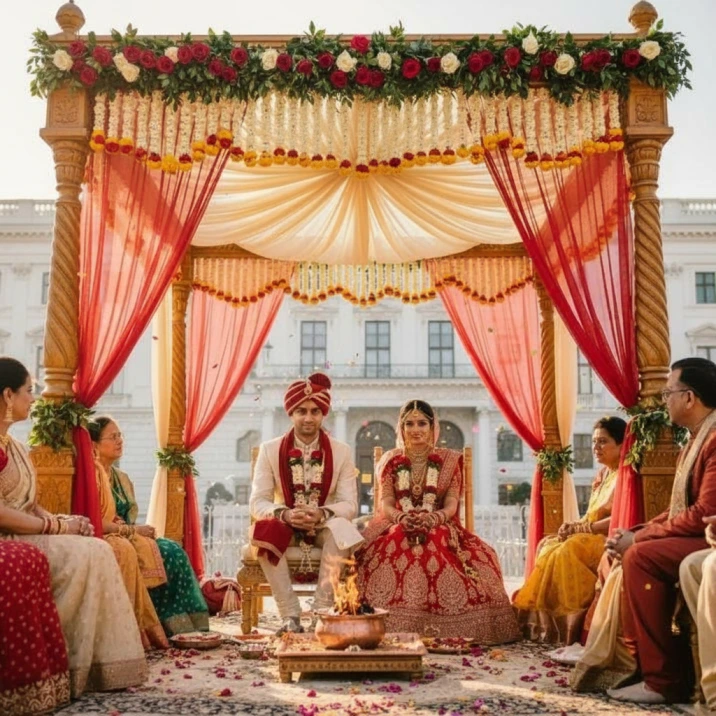
Hindu Wedding Rituals | Complete Guide to Sacred Marriage Ceremonies and Traditions
Explore the profound spiritual significance, step-by-step ceremonies, and ancient traditions that define authentic Hindu marriages
📑 Table of Contents
- 1. Introduction to Hindu Wedding Rituals and Their Spiritual Significance
- 2. Pre-Wedding Ceremonies: Mehndi, Sangeet, and Haldi Rituals
- 3. The Shaadi (Wedding) Day: Complete Ceremony Breakdown
- 4. Core Wedding Rituals: Mandap, Varmala, Kanyadaan, and Vivaha Samskara
- 5. Post-Wedding Traditions: Griha Pravesh and Suhaag Raat Customs
- 6. Regional Variations in Hindu Wedding Ceremonies
- 7. Modern Hindu Weddings: Blending Tradition with Contemporary Celebrations
1. Introduction to Hindu Wedding Rituals and Their Spiritual Significance
Hindu wedding rituals represent one of the most elaborate, spiritually profound, and culturally rich marriage traditions in the world. Far more than mere ceremonial formalities, these sacred rituals embody thousands of years of Vedic wisdom, spiritual philosophy, and cosmic principles encoded into every gesture, mantra, and symbolic action. Hindu weddings are not simply celebrations of love between two individuals they are sacred transformations that unite two souls, two families, and two lineages through divine consciousness.
The Shastras teach that marriage, or “Vivaha Samskara,” is one of the sixteen sacred rites of passage (Shodasha Samskaras) that progressively purify and evolve human consciousness throughout the lifespan. For more detailed information about Samskaras, refer to Britannica’s comprehensive guide on Samskaras. The Hindu wedding ritual is designed to invoke divine blessings, purify the couple’s karma, establish sacred bonds between families, and create the optimal conditions for spiritual growth and dharmic living within the marriage partnership.
🕉️ The Spiritual Foundation of Hindu Wedding Rituals
Hindu marriage traditions are rooted in the concept of “Artha Vivaha,” which means marriage for righteous purposes. According to Hindu philosophy, marriage serves four primary objectives: (1) Dharma fulfilling religious and social duties; (2) Artha creating material stability and prosperity; (3) Kama fostering love, intimacy, and emotional fulfillment; and (4) Moksha supporting each other’s spiritual evolution toward liberation. Every ritual element is carefully designed to support these sacred objectives. Learn more about chakra activation and spiritual evolution through authentic Vedic practices.
2. Pre-Wedding Ceremonies: Mehndi, Sangeet, and Haldi Rituals
The days preceding the actual wedding ceremony are filled with sacred pre-wedding rituals designed to mentally, emotionally, and spiritually prepare the couple and their families. These Hindu pre-wedding ceremonies are equally important as the main wedding ritual, as they establish the energetic foundation for the marriage and allow families to unite in celebration and purpose.
🌺 Mehndi Ceremony: The Henna Application Ritual
Mehndi (also spelled Mehendi) is one of the most visually stunning and joyful pre-wedding ceremonies in Hindu wedding traditions. Held typically one to three days before the wedding, the Mehndi ceremony celebrates the bride’s femininity and beautification through the ancient art of henna application. The word “Mehndi” comes from the Sanskrit “Mehndi,” meaning a paste made from henna leaves a cooling herb with natural dyeing properties.
Spiritual Significance: In Hindu tradition, mehndi symbolizes love, beauty, joy, and auspiciousness. The darker the mehndi stain on the bride’s hands and feet, the deeper the groom’s love is believed to be. Applying mehndi is an act of beautification and preparation for marriage, signifying the bride’s readiness to enter a new phase of life. The application of mehndi on women’s hands represents the binding of love and commitment.
Mehndi Ceremony Process: Professional henna artists (called mehndi wallahs) apply intricate designs on the bride’s hands, arms, feet, and legs. Female relatives and friends also get mehndi applied in celebration. The ceremony involves singing traditional folk songs, dancing, eating sweet dishes, and festive celebration. Traditionally, a small ring or coin is hidden in the mehndi paste as a playful game—whoever finds it in their plate during the meal is said to be next to marry.
🎵 Sangeet Ceremony: The Musical Celebration
Sangeet means “music” or “singing” in Sanskrit, and the Sangeet ceremony is a vibrant celebration of song, dance, and music in Hindu wedding traditions. Typically held one or two days before the wedding, this ceremony brings both families together for an evening of entertainment, bonding, and joyful celebration. The Sangeet ceremony has evolved into one of the most anticipated events in modern Hindu weddings. Explore Indian classical music traditions that often accompany these ceremonies.
Spiritual Purpose: While Sangeet is celebrated as a joyous occasion, it serves the spiritual purpose of creating positive vibrations and harmonious energy between the two families. Music and singing are believed to elevate consciousness, purify the atmosphere, and invoke divine blessings. The collective singing and dancing create a unified energy field that strengthens family bonds and prepares the environment for the sacred wedding ceremony to follow.
Traditional Sangeet Format: The ceremony traditionally features women from both families singing traditional songs about marriage, love, and family life. Female relatives perform folk dances, wedding songs (often teasing the groom), and classical music performances. Dholak (traditional hand drum) playing accompanies the singing and dancing, creating rhythmic energy throughout the evening. Modern Sangeet ceremonies often include choreographed dance performances, contemporary music, and professional entertainment.
🟡 Haldi Ceremony: The Turmeric Paste Ritual
Haldi (also known as Pithi or Turmeric ceremony) is held one day before the wedding and involves applying a ceremonial paste made from turmeric, yogurt, chickpea flour, and oils to the bride and groom’s bodies. The word “Haldi” comes from Sanskrit “Haridra,” meaning turmeric—a sacred herb with purifying and beautifying properties according to Ayurvedic medicine.
Medicinal and Spiritual Benefits: Turmeric has been used in Hindu tradition for thousands of years as a purifying, healing, and beautifying herb. In Hindu wedding rituals, the haldi ceremony serves multiple purposes: (1) It purifies the bride and groom’s bodies and subtle energy bodies; (2) It beautifies the skin and gives a natural glow before the wedding; (3) It calms the nervous system and reduces anxiety; (4) It invokes divine blessings and auspiciousness. The application of haldi is believed to invoke Goddess Lakshmi’s blessings for prosperity and beauty.
Haldi Ceremony Rituals: The paste is applied to the bride’s (and often the groom’s) face, hands, feet, and body by female family members in a joyful gathering. The ceremony involves singing, laughter, and celebration among women relatives. In many regions, the bride’s friends playfully tease the groom and may cover him with haldi as well. Traditionally, turmeric is considered sacred and is applied with prayers and blessings for the couple’s health, happiness, and longevity in marriage.
3. The Shaadi (Wedding) Day: Complete Ceremony Breakdown
“Shaadi” means wedding in Hindi and refers to the actual marriage ceremony day. The Hindu wedding day (also called Vivaha or Vivaaha in Sanskrit) is orchestrated according to auspicious planetary alignments and timing determined by Vedic astrology. Every element of the ceremony from the exact timing to the sequence of rituals is carefully planned to ensure maximum spiritual benefit and divine blessing.
🕯️ The Mandap: Sacred Wedding Pavilion of Hindu Wedding Rituals
Mandap (also spelled Mandapa or Mantap) is the sacred pavilion or canopy under which the Hindu wedding ceremony takes place. Constructed from wood and bamboo, and decorated with flowers, the Mandap is a temporary sacred space that becomes a cosmic gateway during the wedding ritual. The Mandap typically has four pillars representing the four cardinal directions, symbolizing completeness and the integration of all cosmic elements.
Spiritual Significance: The Mandap represents the sacred space where heaven and earth meet, where the divine and earthly realms intersect. The four pillars symbolize dharma (righteousness), artha (prosperity), kama (love), and moksha (liberation). The circular or square structure creates a protected energetic space where the couple can unite safely under divine protection. Sitting under the Mandap during the ceremony means the couple is literally sitting within a sacred container of divine energy and protection.
🎺 Baraat: The Groom’s Procession
The Baraat is the groom’s procession to the wedding venue, accompanied by male family members, friends, musicians, and dancers. The baraat is a joyous, celebratory procession where the groom (called the “Dulla Raj” or “Raja” for the day) rides on a decorated horse, camel, or in a car, while musicians play traditional instruments like drums (nagaras), trumpets, and flutes. Dancers and family members dance and celebrate alongside the procession.
Cultural and Spiritual Meaning: The baraat symbolizes the groom’s departure from his family home to begin a new chapter. The joyous celebration and public declaration of marriage honor the groom and acknowledge the significance of his transformation. The arrival of the baraat is considered auspicious, and the bride’s family traditionally welcomes the baraat with sweets, flowers, and gestures of welcome called “Milni” (formal greetings between groom’s and bride’s families).
4. Core Wedding Rituals: Mandap, Varmala, Kanyadaan, and Vivaha Samskara
💐 Varmala (Var Mala): The Garland Exchange
The Varmala ceremony is the first ritual act under the Mandap where the bride and groom exchange flower garlands (mala) around each other’s necks. “Var” means groom in Sanskrit, and “Mala” means garland, so Varmala literally means “groom’s garland.” This beautiful ritual symbolizes the couple’s acceptance of each other as marriage partners and their mutual consent to the union.
Spiritual and Symbolic Meaning: The exchange of garlands represents the couple’s first mutual gesture of love and acceptance. Flowers represent purity, beauty, and the sweetness of love. By garland-exchanging, the couple publicly acknowledges each other and seek blessings from the assembled community. The circular nature of the garland symbolizes the eternal cycle of life and the endless nature of their commitment. In many Hindu traditions, a playful element is added where the bride and her friends try to place the garland on the groom’s neck while the groom’s family tries to prevent it—this playful ritual represents the balance between giving and taking that will characterize their marriage.
Contemporary Adaptation: In modern Hindu Weddings , the Varmala ceremony has become increasingly significant as a moment for public display of affection between the couple. Some couples personalize their garlands with flowers that hold specific meaning or colors that represent their personalities or family traditions.
👰 Kanyadaan: The Bride’s Gift Ceremony
Kanyadaan is one of the most emotionally significant rituals in Hindu weddings. “Kanya” means daughter and “Daan” means gift, so Kanyadaan literally means “gift of the daughter.” In this ritual, the bride’s parents (typically the father, though increasingly both parents) formally give their daughter to the groom and his family in marriage. The bride stands between her parents and the groom under the Mandap, and her parents place her hand in the groom’s hand while reciting sacred mantras and prayers.
Deep Spiritual Significance: Kanyadaan is considered one of the most sacred and meritorious acts in Hindu philosophy. According to the Shastras, giving one’s daughter in marriage to a worthy groom is one of the highest forms of Daan (charitable giving). The ritual signifies the bride’s transition from her father’s household to her husband’s household, and from childhood/youth to adulthood. The parents’ blessings during Kanyadaan are believed to be extremely powerful and invoke divine protection for the couple throughout their married life.
Emotional and Practical Significance: Kanyadaan is often the most emotionally charged moment of the Hindu wedding for parents, particularly the father who must let go of his daughter. This ritual acknowledges and honors the parents’ role in raising the bride and validates their sacrifice and love. In modern times, many parents perform Kanyadaan as an act of blessing rather than literally “giving away” their daughter, emphasizing that the bride makes her own choice to marry and her parents support this decision.
🕉️ Vivaha Samskara: Core Marriage Mantras and Sacred Vows in Hindu Wedding Rituals
The Vivaha Samskara (marriage sacrament) is the central ritual of the Hindu wedding where the couple actually becomes married according to Hindu law and tradition. This involves the recitation of sacred Vedic mantras by the priest while the bride and groom perform specific ritual actions. The key rituals within the Vivaha Samskara are:
- Pani Grahanam (Hand Holding): The groom holds the bride’s hand as sacred mantras are recited, symbolizing their bond and commitment to hold each other through life.
- Laja Hom (Throwing parched rice into fire): The bride throws parched rice into the sacred fire while standing next to the groom, symbolizing her nurturing nature and role in the family.
- Saptapadi (Seven Steps): This is the most crucial ritual where the bride and groom take seven steps together around the sacred fire. Each step has specific significance related to nourishment, strength, health, happiness, progeny, health, and lifelong devotion.
Spiritual Meaning of the Seven Steps: The Saptapadi symbolizes the couple’s journey through life together. As they take each step, the couple invokes blessings for specific aspects of married life. The completion of the seven steps is considered the moment the couple becomes legally and spiritually married according to Hindu tradition. The sacred fire (Agni) witnesses these steps and is believed to bless the union and carry the couple’s commitment to the divine realm.
Sacred Mantras: Throughout the Vivaha Samskara, the Vedic priest recites mantras from the Vedas and Upanishads that invoke divine blessings, invoke the presence of celestial beings, and establish the sacred nature of the marriage bond. These ancient mantras have been recited in Hindu weddings for thousands of years and are believed to carry spiritual power that transcends time.
5. Post-Wedding Traditions: Griha Pravesh and Beyond
In Hindu wedding rituals after the wedding ceremony, several important post-wedding rituals mark the bride’s transition into her new home and family. These ceremonies are designed to welcome the bride into her new household and invoke blessings for a prosperous, happy, and fertile married life.
🏠 Griha Pravesh: Entering the Groom’s Home
Griha Pravesh is the ritual where the bride enters her new marital home for the first time as a married woman. “Griha” means home and “Pravesh” means entering, so Griha Pravesh literally means “home entry.” This sacred ritual typically occurs on the evening of the wedding day or the next day, depending on family customs and regional traditions. The ceremony marks the bride’s official transition from her parents’ home to her husband’s home.
Traditional Griha Pravesh Ritual: The groom’s mother welcomes the bride at the entrance of the home with an oil lamp (diya). The bride is led to the threshold, and in many traditions, the bride’s foot touches a vessel filled with rice and turmeric, leaving her footprint as she enters. This symbolizes her auspicious entry and the bringing of prosperity to the household. The bride is then led to the main living area where family members welcome her with flowers, sweets, and blessings.
Spiritual Significance: Griha Pravesh is not merely a formal entry but a sacred transition where the bride becomes a member of her new family and household. The rituals associated with entering the home—the oil lamp, the rice footprint, the family blessings—all invoke divine protection and prosperity for the bride in her new dwelling. The home is considered sacred space in Hindu tradition, and the bride’s entry is treated with utmost reverence and blessing.
6. Regional Variations in Hindu Wedding Rituals
While the core principles of Hindu wedding rituals remain consistent across India and the Hindu diaspora, there are significant regional variations based on local customs, cultural traditions, and linguistic differences. Each region has developed its own unique style of celebrating Hindu weddings while maintaining the fundamental Vedic and spiritual principles. For comprehensive information on regional traditions on Hindu wedding rituals , explore wedding customs across India.
🇮🇳 North Indian Hindu Wedding Rituals
North Indian Hindu weddings, particularly in regions like Punjab, Delhi, and Uttar Pradesh, are characterized by elaborate pre-wedding celebrations, the Baraat procession, and multi-day celebrations. The wedding ceremony typically involves seven steps (Saptapadi) and extensive use of turmeric, red color, and mehndi. Punjabi Sikh weddings follow the Anand Karaj ceremony, while Hindu weddings in North India often feature the bride in a red or gold wedding lehenga and the groom in traditional sherwanis with turbans.
🌴 South Indian Hindu Wedding Rituals
South Indian Hindu weddings (Tamil, Telugu, Kannada, and Malayalam communities) have distinct characteristics. Tamil weddings typically feature the Thali ceremony where the groom ties a sacred thread with gold beads around the bride’s neck, signifying marriage. South Indian brides wear white silk sarees with gold borders, and elaborate rituals like Chandanam (applying sandal paste) and Sampradata (symbolic acts) are performed. The weddings often last for an entire day with continuous ritual performances and are characterized by the use of banana plants, coconut, and flower arrangements specific to South Indian traditions.
🏔️ West Indian and Other Regional Hindu Wedding Rituals
West Indian Hindu weddings (Gujarati, Maharashtrian, and Rajasthani communities) feature unique ceremonies like Haldi ceremony, Mehendi with song and dance, and elaborate wedding feasts. Maharashtrian weddings include the Jai Mala (Varmala exchange) and the Nath Pujan where the groom’s mother gifts nose ring to the bride. Each region celebrates with its own color preferences, traditional dress styles, regional dishes, and unique ritual sequences while maintaining the sacred core of Hindu wedding traditions.
7. Modern Hindu Weddings: Blending Tradition of Hindu Wedding Rituals with Contemporary Celebrations
Contemporary Hindu weddings represent a dynamic evolution of ancient traditions, where modern couples blend sacred ritual with contemporary celebrations, international venues, and personal preferences while maintaining the spiritual and cultural essence of Hindu marriage ceremonies. This blend creates authentic experiences that honor ancestral traditions while reflecting the values and personalities of the couple and their families.
🌍 Global Hindu Weddings and Cultural Adaptation
Hindu weddings celebrated globally among the Indian diaspora demonstrate remarkable adaptability while maintaining core spiritual elements. Communities in the United States, United Kingdom, Canada, Austria, and other nations have adapted traditional ceremonies to local venues, climates, and cultural contexts while preserving the essential rituals and spiritual significance.
Modern adaptations include: (1) Conducting ceremonies in banquet halls, gardens, or non-traditional venues when temples are not available; (2) Scheduling weddings according to Vedic auspicious timings while accommodating modern travel and work schedules; (3) Incorporating technology for live-streaming ceremonies to relatives worldwide; (4) Blending languages and cultural elements when couples come from different regions or when weddings include multicultural guest lists.
Preservation of Sacred Elements: Despite these adaptations, modern Hindu couples maintain the core sacred elements the Mandap, sacred fire, Vedic mantras, the seven steps, and family blessings ensuring that the spiritual essence and divine connection of Hindu wedding rituals remain intact regardless of geographic location or modern variations in celebration style.
🕉️ Authentic Vedic Wedding Principles Across Traditions
Throughout India’s diverse regions and communities, Hindu wedding rituals maintain consistent core principles rooted in Vedic wisdom. While regional variations celebrate local customs and traditions, the essential sacred elements the Mandap, sacred fire, Vedic mantras, Kanyadaan, Saptapadi, and family blessings form the authentic foundation of authentic Hindu marriages.
The Shastras emphasize that these ceremonies invoke divine protection and cosmic blessing specifically through adherence to proper ritual structure and Vedic methodology. For couples seeking to honor authentic Hindu wedding traditions, consulting with experienced Vedic scholars and priests ensures ceremonies maintain their transformative spiritual power and authentic connection to divine principles.
The purity and efficacy of Hindu wedding rituals depend on proper execution of Hindu wedding Rituals according to Shastric guidelines and Vedic principles established through millennia of practice.
Conclusion: The Eternal Significance of Hindu Wedding Rituals
Hindu wedding rituals represent far more than ceremonial traditions they are sophisticated spiritual technologies that have been refined over thousands of years to facilitate consciousness evolution, invoke divine blessings, and create the optimal conditions for a sacred, dharmic, and spiritually progressive married life. From the preparatory ceremonies of Mehndi, Sangeet, and Haldi, through the sacred rituals of Kanyadaan and Vivaha Samskara, to the post-wedding Griha Pravesh, every element serves specific spiritual purposes while honoring family bonds, cultural identity, and the couple’s commitment to each other.
The beauty of Hindu wedding rituals is in their traditions which are remarkable flexible and adaptable. While maintaining core spiritual principles and Vedic foundations, these Hindu Wedding rituals have evolved across regions, centuries, and cultural contexts. Modern Hindu couples continue this evolution, blending ancient wisdom with contemporary values, creating weddings that honor their ancestral traditions while reflecting their unique identities, relationships, and visions for married life.
Whether celebrated in grand traditional ceremonies or intimate gatherings, in temples or modern venues, in one’s ancestral homeland or across continents, Hindu wedding rituals continue to invoke the divine blessings, spiritual connection, and conscious commitment that transform two individuals into a sacred partnership, united not only in love but in shared spiritual purpose and dharmic living.
📚 Expert Guidance & Authentic Hindu Wedding Rituals
Article prepared with meticulous attention to Shastric authenticity, spiritual depth, and expert-level knowledge. For personalized Hindu wedding rituals, consultations, authentic ceremony planning, ritual guidance, and advanced teachings grounded in traditional Shastric methodology, consult with qualified practitioners experienced in authentic Vedic traditions. Explore our comprehensive Chakra Puja and Tantric teachings for deeper spiritual understanding.
Additional Resources:
Hindu wedding rituals transformative power is most effectively accessed through sincere intention, ethical foundation, and proper guidance from gurus or teachers whose consciousness has been activated through genuine practice. The spiritual benefits of these sacred ceremonies extend far beyond the wedding day they create energetic foundations that support the couple’s evolution throughout their married life, fostering dharmic living, spiritual growth, and divine grace.
Last Updated: January 12, 2026 | Article Authority Level: Advanced Vedic Knowledge | Shastric Alignment: Authentic Traditional Methodology