
Hindu Priest in Austria and Europe
Vedic ceremonies, Puja, Homam and Jyotiṣa conducted across Europe by Pandit Sahadev, in unbroken lineage transmission.
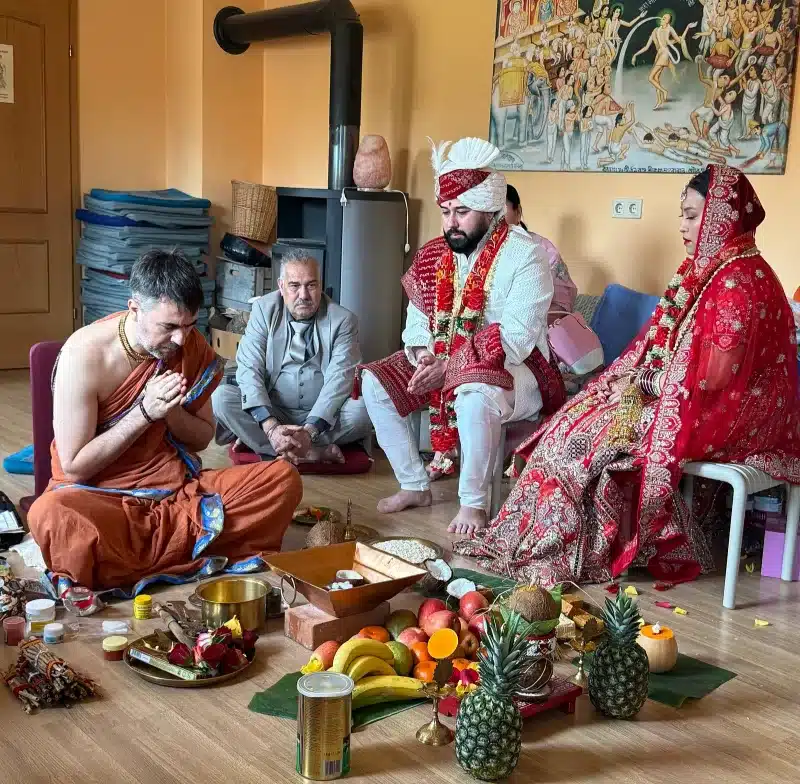
A Hindu priest in Austria conducts the same rites, under the same authority, as one conducting them in Bhārata. Pandit Sahadev keeps the Vedic, Āgamic and domestic ceremonies for households in Vienna and throughout Europe: the worship of the Devatā, the offering into the consecrated Agni, the Saṃskāras that form a person across the whole arc of a life, the Vivāha, the consecration of a dwelling, and the reading of cosmic time. What follows sets out what each of these is, what qualifies a man to perform them, and why the ground on which a rite is kept does not diminish it.
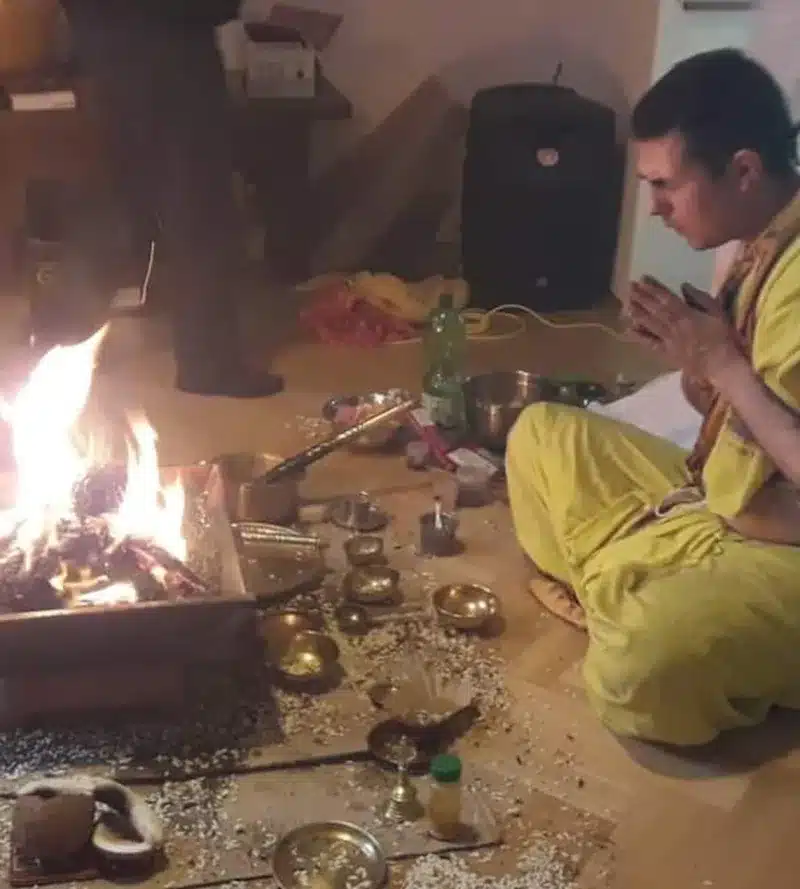
Homam | Sacred Vedic Fire Ritual for Spiritual Transformation
Homa in Europe
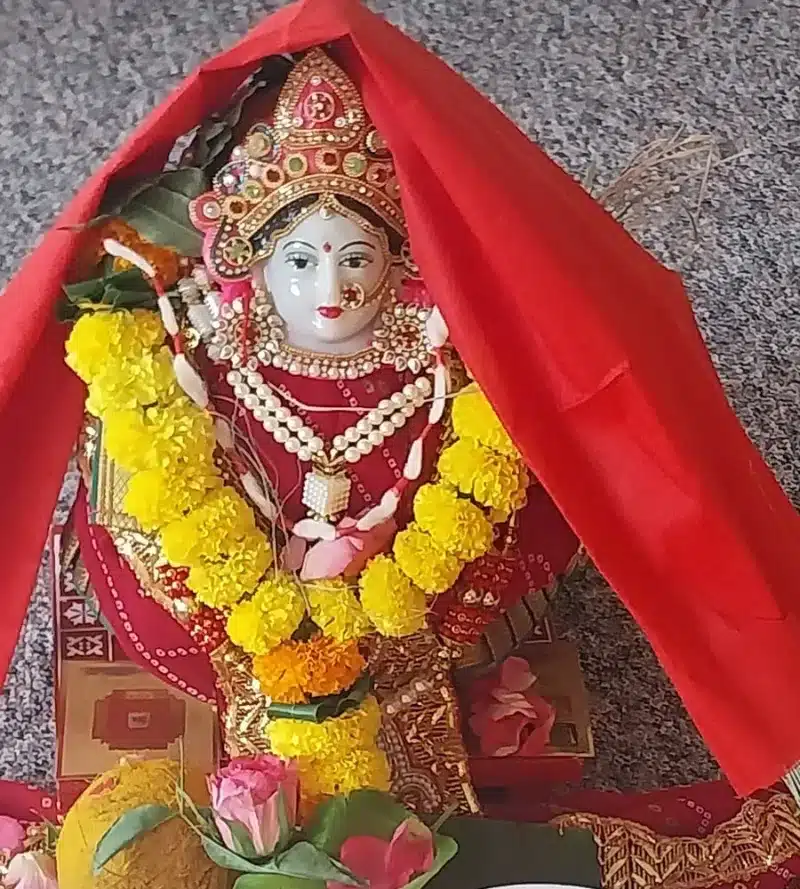
Understanding Hindu Puja | Vedic and Tantric Traditions
Puja in Europe
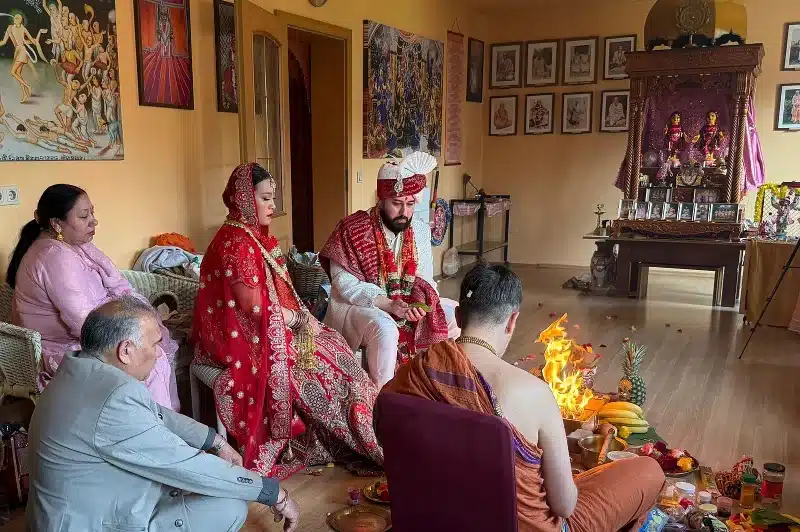
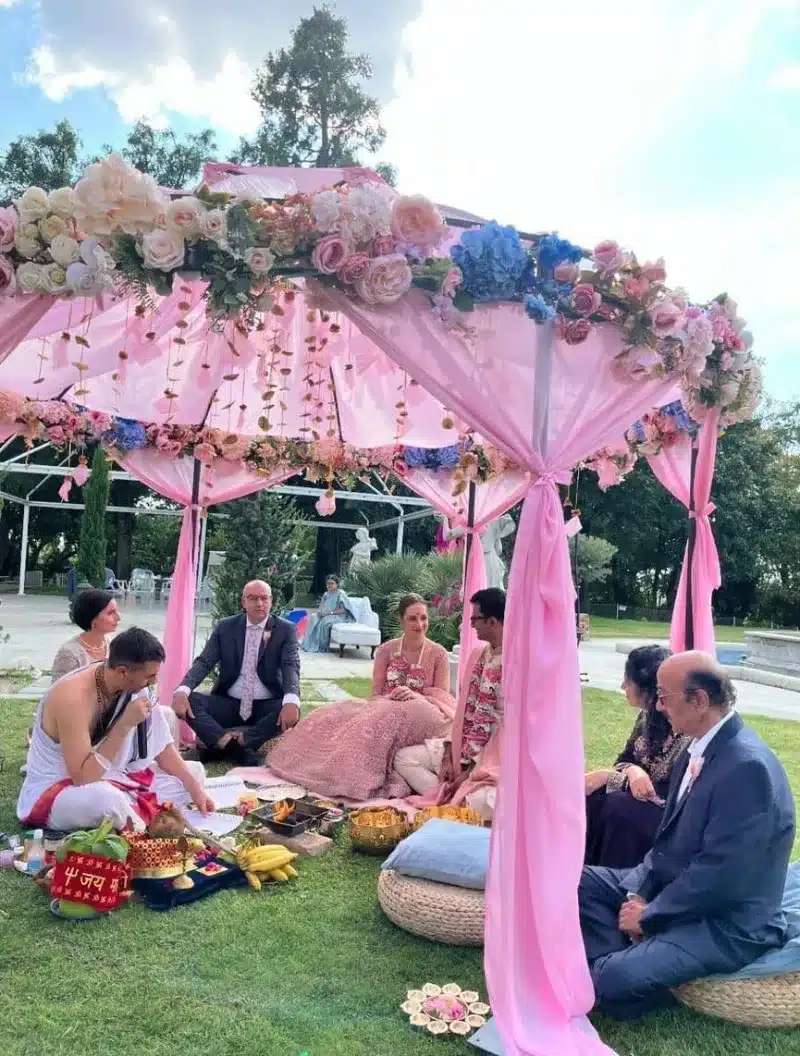
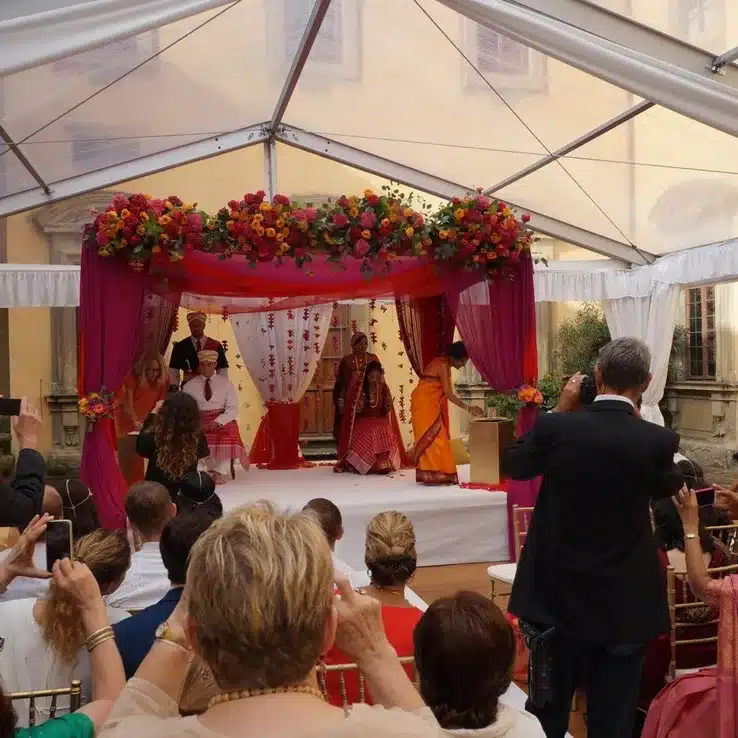
Hindu Wedding Seva | Sacred Union Ceremonies
Hindu and Indian Wedding Seva in Europe
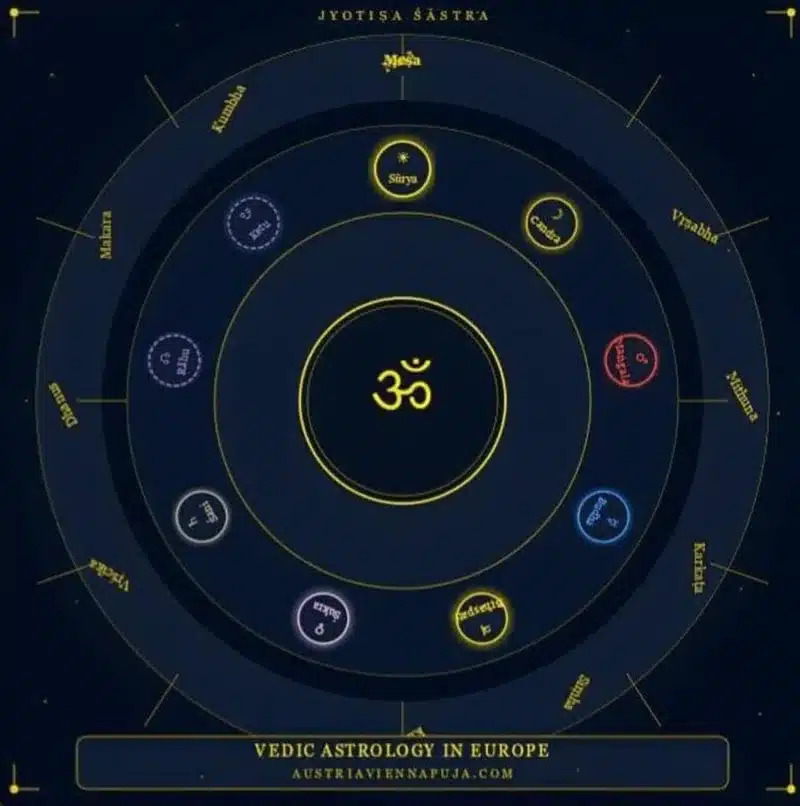
Vedic Astrology | Cosmic Timing and Spiritual Guidance
Vedic Astrology in Europe
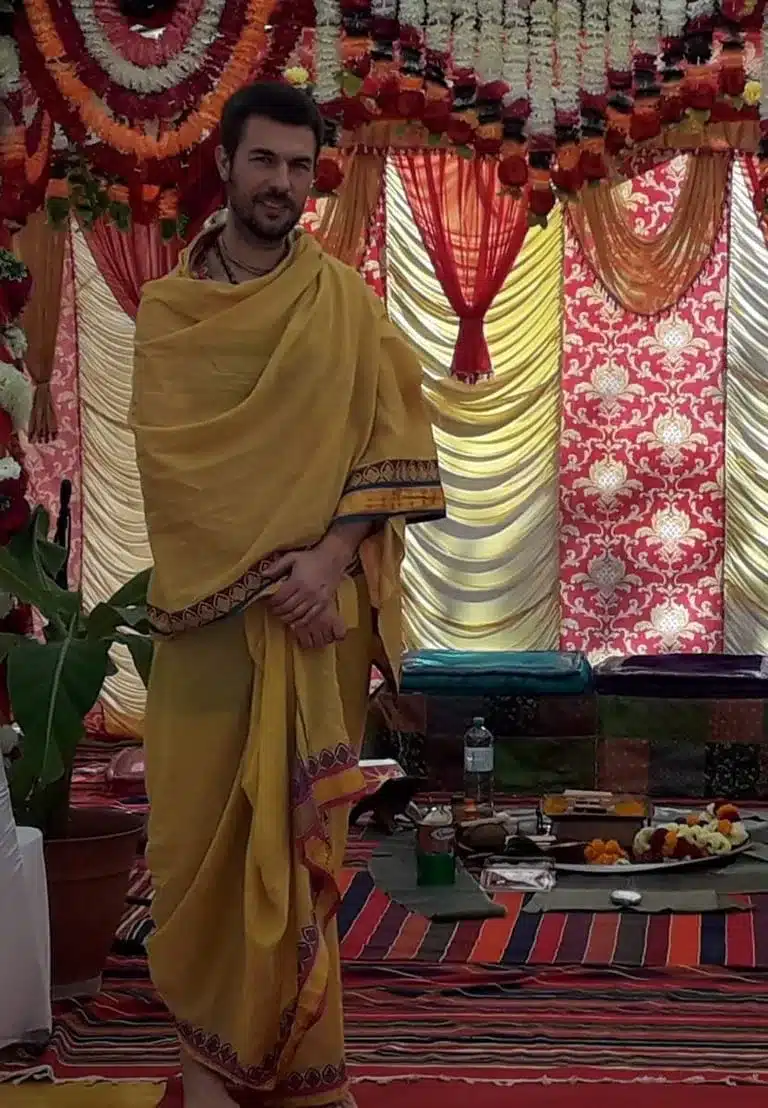
The Officiant and the Line He Stands In
Pandit Sahadev has conducted Vedic ceremonies for families across Europe for some twenty-five years, from a base in Vienna. He is formally affiliated with the Radha Govinda Math in Traiskirchen, Lower Austria, where he also serves, and it is from that standing that the rites set out on this site are conducted.
A Hindu priest is not self-appointed. He receives what he carries from one who held it before him and is pledged to hand it on unaltered: the Mantras with their Svara intact, the Paddhati that orders each rite, and the judgment that fits a Saṃskāra to the family and the occasion before him. The line a priest stands within, running from the Ṛṣis of the Veda through the Purohita of the household to the present day, is traced in the account of the Vedic lineage of Pandit Sahadev.
What Makes a Rite Genuine in Europe
The tradition holds four things to constitute a rite, and geography is not among them: a qualified Ṛtvij, the Mantra spoken with its correct accent, the consecrated Agni, and the Saṅkalpa, the declaration of intent that names the exact time and ground of the performance. When the Saṅkalpa names a place in Austria, that ground is drawn into the rite and made fit, as any ground is made fit, by the naming and the Mantra.
This is why a Nāmakaraṇa kept in Vienna is entire, and why a Vivāha sealed before Agni on Austrian soil binds as the Gṛhya Sūtras say it binds. The Saṃskāras do not weaken with distance from Bhārata, because they were never held to draw their force from place. What they require travels with the priest and with the family: the trained voice, the kindled fire, and the right intention declared aloud.
The Rites Conducted
The daily and occasional worship of the Devatā through the sequence of Upacāras. The fire offerings, among them the Gaṇapati Homa for the removal of obstacles, the Mahāmṛtyuñjaya for health and protection, the Navagraha for the pacification of the planetary periods, and the Laxmi Homa for prosperity. The sixteen Saṃskāras that consecrate a person across the whole arc of a life, from the naming of a newborn to the rites that release the departed. The Vivāha. The consecration of a new dwelling. And, on the astrological side, the reading of the birth chart and the computation of the auspicious hour for the local horizon. A fuller map of each, with the dedicated exposition behind it, is given under Vedic rites and Sevā.
Where the Rites Are Kept
Vienna and the whole of Austria first, and beyond it the continent: Italy, Greece, Switzerland, Germany, Slovakia, Portugal and Croatia among them. The rite itself is kept in Sanskrit; the explanation that accompanies it is given in English or German, where a family prefers it, so that those present follow what is being done rather than watch it from outside.
A household uncertain which rite its situation calls for does not need to determine that alone. The proper first step is an unhurried conversation in which the family describes its circumstance and the priest says plainly which rite the tradition offers for it, in which regional form, and at what hour the Śāstra permits it. A priest who reaches for a ceremony in every circumstance is not serving the family well.
Questions Families Ask
Who performs Hindu ceremonies in Vienna and Austria?
Pandit Sahadev, a Hindu priest based in Vienna, has conducted Vedic ceremonies for families across Austria and Europe for some twenty-five years. The practice is known online as Austria Vienna Puja and is listed on Google as Hindu Pandit in Austria; the three names refer to the same priest and the same Sevā.
Is Austria Vienna Puja a temple?
No. It is a priest’s Sevā, not a temple: there is no public worship, no darśana hours and no meals. Pandit Sahadev comes to the family’s home or to the venue the family has chosen. He is formally affiliated with the Radha Govinda Math in Traiskirchen (Mühlenweg 5, 2514 Traiskirchen), where he also serves.
Can a Hindu or Indian wedding be held in Vienna, Austria or elsewhere in Europe?
Yes. For couples planning an Indian wedding in Vienna, elsewhere in Austria or across Europe, the Vivāha is conducted in full according to the Hindu rite, at an hour fixed by Muhūrta. Whether the rite is also recognized in civil law differs from country to country; this is set out in Hindu wedding legal recognition in Europe.
Which ceremonies does Pandit Sahadev conduct?
Puja and Homa; the Vivāha; the Saṃskāras across the arc of a life, among them Nāmakaraṇa, Annaprāśana and Upanayana; the consecration of a dwelling (Gṛha Praveśa); the last rites and Śrāddha; and Jyotiṣa.
In which countries and languages are the rites kept?
Vienna and the whole of Austria first, and beyond it Germany, Switzerland, Italy, Slovakia, Croatia, France, Spain, Portugal and Greece. The rite itself is kept in Sanskrit; the explanation is given in English or German.
How is a ceremony arranged?
With an unhurried conversation. Write on WhatsApp using the button at the foot of this page, or email . The family describes its circumstance, and the priest says which rite the tradition offers for it and at what hour the Śāstra permits it.
Further Reading
For families weighing where a ceremony might be held, the considerations that matter are examined in Hindu wedding destinations in Europe, and the rites themselves, step by step, in Hindu wedding rituals and their sequence. The legal position, which differs sharply from one country to the next, is set out in Hindu wedding legal recognition in Europe.
On the astrological side, the compatibility of two charts before a marriage is treated in Kundli matching for Hindu marriages in Austria, and the election of the date itself in electing the Vivāha Muhūrta. The ordering of a dwelling according to Vāstu is covered in Vāstu guidance for the home, and the rites at the close of a life in the account of Antyeṣṭi and Śrāddha.
For the doctrinal ground beneath all of it, two expositions stand behind this work: why Sanātana Dharma is a way of life rather than a religion, and the Saṃskāras and ceremonies of the Hindu tradition.