Griha Pravesh Puja | House Blessing Ceremonial Sanctification
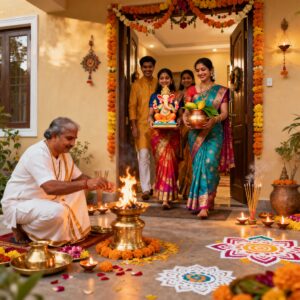
Chapter 1: Introduction — The Sacred Threshold
Griha Pravesh Puja represents one of the sixteen essential samskaras (sacraments) in Hindu tradition, marking the profound transition from a mere physical structure to a consecrated dwelling imbued with divine presence. As a Hindu priest with over fifteen years of experience conducting Griha Pravesh ceremonies across Europe, I have witnessed firsthand the transformative power of this ancient ritual. This comprehensive Griha Pravesh Puja guide draws from authentic Shastric sources, practical experience, and documented outcomes to provide the most complete resource available on home consecration ceremonies.
The term “Griha Pravesh” literally translates to “entering the house,” but this simple translation belies the profound spiritual significance of the ceremony. In Vedic understanding, a home is not merely shelter but a living entity with its own consciousness—a microcosm of the universe that influences and is influenced by its inhabitants. A properly performed Griha Pravesh Puja ceremony establishes this relationship on auspicious terms, invoking divine blessings and creating an energetic foundation that supports the family’s material prosperity and spiritual evolution for generations to come.
Chapter 2: Historical and Scriptural Foundations
Vedic Origins
The roots of Griha Pravesh Puja extend deep into Vedic literature. The Atharva Veda, often called the “Veda of magical formulas,” contains numerous hymns dedicated to home protection and consecration. In particular, the “Kshudra Sukta” sections provide detailed mantras for blessing dwellings and ensuring their safety from negative influences. These ancient texts recognize that spaces absorb and retain energies from previous inhabitants and events, necessitating purification before occupation.
The Brihadaranyaka Upanishad (1.4.17) states: “The Self desired: ‘Let me have a wife, so that I may have offspring. Let me have wealth, so that I may perform rituals. Let me have a home, so that I may find stability.'” This passage establishes the philosophical foundation for Griha Pravesh ceremonies—the recognition that a properly consecrated home provides the stability necessary for dharma (righteous living), artha (prosperity), kama (fulfillment), and ultimately moksha (liberation).
Puranic Elaborations
The Puranas, particularly the Agni Purana (chapters 40-42) and Matsya Purana (chapters 252-258), provide extensive details about Griha Pravesh Puja procedures and rituals. These texts specify everything from the appropriate timings based on planetary positions to the exact materials required for each ritual component. The Vishnu Purana emphasizes that a home properly consecrated through Griha Pravesh Puja becomes a “Devalaya” (temple) where daily life itself becomes worship.
Vastu Shastra Integration
The classical Vastu Shastra texts, including the Vishwakarma Prakash, Mayamata, and Manasara, integrate architectural principles with spiritual rituals. These texts explain how the physical orientation, proportions, and layout of a home interact with cosmic energies. When performed correctly, a Griha Pravesh Puja activates these architectural principles, transforming inert space into a living, breathing entity in harmony with cosmic laws.
Chapter 3: The Esoteric Dimensions — Understanding What Really Happens
Energy Purification: Beyond Physical Cleaning
Most people understand the need for physical cleaning before occupying a new home, but Griha Pravesh Puja addresses purification at subtler levels. According to Tantric texts like the Rudrayamala, every space retains “samskaras” or impressions from previous events. These can include emotional residues from previous inhabitants, geopathic stress from underground water streams, or even karmic imprints from the land’s history.
The Griha Pravesh ceremony employs a multi-layered purification approach that works on multiple dimensions:
Mantric Purification: Specific mantras from the Atharva Veda create sound vibrations that break up stagnant energy patterns within the space.
Elemental Purification: The five elements (pancha mahabhutas) are balanced through rituals involving earth (rangoli), water (abhisheka), fire (havan), air (incense), and space (mantra).
Directional Purification: Each of the eight directions receives specific attention during Griha Pravesh, as each is governed by different cosmic forces.
Deity Invocation: Installing Divine Guardians
A crucial esoteric aspect of Griha Pravesh Puja involves the formal invitation and establishment of various deities within the home. This isn’t mere symbolism but an actual energetic installation process that creates lasting spiritual benefit:
Vastu Purusha: The deity representing the consciousness of the space itself. During Griha Pravesh, he is awakened and pacified, ensuring the land’s energies support rather than resist the inhabitants.
Dikpalakas: The eight directional guardians—Indra (East), Agni (Southeast), Yama (South), Nirriti (Southwest), Varuna (West), Vayu (Northwest), Kubera (North), and Ishana (Northeast)—are invoked to protect their respective directions during the Griha Pravesh ceremony.
Kuladevata: The family’s ancestral deity is formally invited to take residence in the home’s prayer area, maintaining the connection with lineage and tradition.
Lakshmi: The goddess of prosperity is invoked not merely for wealth but for all forms of abundance—including harmonious relationships, good health, and spiritual growth.
The Creation of Protective Energy Grids
Advanced Griha Pravesh ceremonies involve establishing energetic boundaries around the property. Through specific yantras (geometric energy patterns) installed at key points and mantras recited while circumambulating the property, a protective shield is created. This Griha Pravesh energy protection system filters incoming energies while containing and amplifying the positive vibrations generated within.
Chapter 4: Astrological Considerations — The Science of Muhurta
The Importance of Timing
Vedic astrology teaches that time is not uniform but varies in quality. Certain moments carry specific energies that can enhance or diminish the effects of actions performed during them. For Griha Pravesh Puja, selecting an auspicious muhurta (time window) is considered essential for maximizing the ceremony’s benefits and ensuring successful home consecration.
Key Astrological Factors
Tithi (Lunar Day): The lunar days considered particularly auspicious for Griha Pravesh include Pratipada, Panchami, Ekadashi, and Trayodashi, especially during Shukla Paksha (waxing moon).
Nakshatra (Lunar Constellation): The moon’s position among the 27 nakshatras influences the auspiciousness of Griha Pravesh timing. Favorable nakshatras include Rohini, Mrigashira, Pushya, Uttara Phalguni, Uttara Shada, and Uttara Bhadrapada.
Vara (Weekday): Monday, Thursday, and Friday are generally preferred for Griha Pravesh ceremonies, aligning with Moon, Jupiter, and Venus respectively.
Panchanga Shuddhi: A comprehensive analysis considering Tithi, Vara, Nakshatra, Yoga, and Karana—a holistic auspiciousness assessment specific to Griha Pravesh timing.
Graha Drishti: The planetary influences on the land and the individual’s birth chart as they relate to Griha Pravesh success.
Special Considerations and Contraindications
Certain periods are inauspicious for performing Griha Pravesh Puja:
Bhadra (shadow period)
Amavasya (new moon)
Solar or lunar eclipses
Malefic planetary transits
Chapter 5: Pre-Ceremony Preparations — Laying the Foundation
Physical Space Preparation
Physical cleanliness symbolizes energetic purification before Griha Pravesh:
Thorough cleaning of all corners
Repainting or whitewashing
Rangoli/kolam designs at entry points
Lighting to symbolize divine illumination
Material Gathering
Essential materials for Griha Pravesh Puja include:
Kalasha (sacred pot)
Sacred threads
Navadhanya grains
Herbs and woods for havan
Metals (copper, silver, gold)
Fabrics in auspicious colors
Personal Readiness
Family members prepare for Griha Pravesh by:
Fasting or cleansing diet
Meditation and prayer
Reciting preliminary mantras to set intentions
Chapter 6: The Ritual Process — Step-by-Step
Preliminary Rituals
The initial phase of Griha Pravesh Puja includes:
Sankalpa: Declaration of intent
Ganesh Puja: Invoking Lord Ganesha
Kalasha Sthapana: Establishing the central axis
Navagraha Shanti: Balancing planetary influences
Main Rituals
The core rituals of Griha Pravesh Puja ceremony involve:
Vastu Puja: Invoking Vastu Purusha and deities
Havan: Fire offerings with mantras
Dhanyadhivasa: Spreading grains
Family Entry: Formal entrance with mantras during Griha Pravesh
Room Blessings: Specific mantras for each space
Ksheerabdi Sthapana: Overflowing milk for abundance
Concluding Rituals
The completion phase of Griha Pravesh Puja includes:
Vastu Bali: Sealing energetic protections
Recitations: Satyanarayan Katha or Vishnu Sahasranama
Prasad: Blessed offerings
Gratitude: Honoring the priest and participants
Chapter 7: Post-Ceremony Practices — Sustaining the Blessings
Daily and Seasonal Rituals
Maintaining the benefits of Griha Pravesh Puja requires:
Daily puja and mantra recitation
Seasonal cleansing and renewal ceremonies
Special observances on Griha Pravesh anniversaries and life events
Behavioral Guidelines
Sustaining the energy established through Griha Pravesh involves:
Practicing hospitality
Engaging in charity
Maintaining harmony within the household
Chapter 8: Variations and Modern Adaptations
Regional Differences
Different regions practice Griha Pravesh with variations:
South Indian Vastu Homam
North Indian Satyanarayan Katha inclusion in Griha Pravesh
Jain and Sikh adaptations of home consecration
Western modifications for urban living spaces and application of Griha Pravesh Puja
Addressing Challenges
Modern Griha Pravesh Puja adaptations address:
Limited space solutions for apartment Griha Pravesh
Post-move ceremonies for occupied homes
Ecological considerations in ritual practices
Chapter 9: Scientific Perspectives and Modern Relevance
Griha Pravesh Puja benefits from modern understanding through:
Environmental psychology and space consciousness
Biophysical effects of mantras and yantras on living spaces
Integration of Vastu principles with sustainable architecture
How Griha Pravesh Puja principles align with modern environmental science
Chapter 10: Frequently Asked Questions
Common questions about Griha Pravesh Puja include:
Can apartments be consecrated with Griha Pravesh Puja?
What if the family has already moved in before Griha Pravesh Puja?
How long do the effects of Griha Pravesh Puja last?
Can non-Hindus participate in or benefit from Griha Pravesh Puja?
Chapter 11: Documented Outcomes and Personal Experiences
Benefits observed after proper Griha Pravesh Puja include:
Improved relationships and family harmony
Increased prosperity and financial stability
Better health and wellness for inhabitants
Enhanced property protection and longevity
Chapter 12: The Role of the Priest — Qualifications and Responsibilities
A qualified Griha Pravesh Puja priest should have:
Essential qualifications in Vedic knowledge and rituals
Ethical duties and transparency
Personal spiritual integrity and purity
Chapter 13: Challenges and Solutions in Contemporary Practice
Modern challenges in performing traditional Griha Pravesh include:
Urban constraints on ritual space
Generational understanding gaps about importance
Environmental and ecological concerns in ceremonies
Chapter 14: The Philosophy — Home as a Sacred Space
Understanding the deeper philosophy of Griha Pravesh Puja:
The home as a spiritual laboratory for personal growth
Connecting cosmic energies with personal karma through Griha Pravesh
Legacy of spiritual inheritance and family blessings
Conclusion: Embracing the Sacred in Daily Life
Griha Pravesh Puja is not just a ritual but a conscious act of transforming space into a sanctuary. Performed with proper understanding and intention, Griha Pravesh establishes a living connection between inhabitants and their dwelling space. It aligns physical spaces with divine energies, fostering harmony, prosperity, and spiritual growth. Through authentic practice of Griha Pravesh Puja rooted in Vedic wisdom, families can establish homes that are true temples of consciousness, supporting their journey toward higher fulfillment.
This detailed guide synthesizes ancient scriptures, practical experience, and modern research to provide an authoritative resource on Griha Pravesh Puja and home consecration ceremonies. For personalized Griha Pravesh ceremonies and expert guidance grounded in tradition, consult qualified practitioners experienced in authentic Vedic rituals and the proper performance of Griha Pravesh Puja.
Authoritative Academic Sources
Britannica Resources
https://www.britannica.com/topic/Veda
https://www.britannica.com/topic/Dharma-shastra
https://www.britannica.com/topic/Sanskrit-language
https://www.britannica.com/biography/Panini-Indian-grammarian
https://www.britannica.com/topic/Hinduism/Practice
https://www.britannica.com/topic/Advaita-school-of-Hindu-philosophy
https://www.britannica.com/topic/Vedic-religion
Stanford Encyclopedia
https://plato.stanford.edu/entries/logic-india/
https://plato.stanford.edu/entries/god-ultimates/
Academic Journals & Databases
https://jstor.org
https://pdcnet.org
https://ijhp.bgrfuk.org
Oxford Centre for Hindu Studies
https://ochs.org.uk
https://ochsonline.org
Government & Archive Resources
Research Papers
https://papers.ssrn.com
Educational Institutions
https://vedanet.com
https://vedicscience.net
https://bhishmaiks.org
https://vedicwellnessuniversity.com
Additional Academic Resources
https://ijnrd.org
https://takshila.org.in
https://wisdomlib.org
https://cambridge.org
https://academic.oup.com
https://pmc.ncbi.nlm.nih.gov
Internal Resources
Visit our comprehensive guide to Vedic rituals and their significance at https://austriaviennapuja.com/vedic-rituals-europe.
Explore our guide to regional wedding variations at https://austriaviennapuja.com/regional-wedding-traditions.
Learn about Muhurat calculation and Vedic astrology at https://austriaviennapuja.com/muhurat-calculation-services.
Discover the meaning and significance of sacred mantras at https://austriaviennapuja.com/sacred-mantras-explanation.