HOMA
Sacred Vedic Fire Ritual for Spiritual Transformation
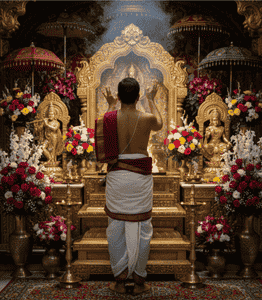
Homa | The Ancient Vedic Fire Ceremony
Sacred Ritual Transformation Through Fire, Mantras & Cosmic Alignment
📑 Complete Guide
- 1. Understanding the Homa or Sacred Fire Ceremony
- 2. Vedic Foundation & Ancient Origins of Homa
- 3. Spiritual Dimensions & Principles of Homa
- 4. Homa Ceremony Types & Practical Applications
- 5. Step-by-Step Ritual Process of Homa
- 6. Modern Practice of Homa in Austria & Europe
- 7. Participation & Experience in Homa
- 8. Frequently Asked Questions about Homa
Understanding the Homa or Sacred Fire Ceremony
Homa (also called Havan or Yajna) is an ancient Vedic ritual where sacred substances are offered into a consecrated fire. Also known as a fire ceremony or sacred fire ritual, this profound practice embodies the principle of Yajna (sacrifice) described in the Bhagavad Gita as one of the primary paths to divine realization. Fire, recognized as Agni Deva (the fire deity), serves as the sacred intermediary between the material and divine realms, transforming earthly offerings into subtle spiritual energy.
The Chandogya Upanishad describes Agni as the cosmic gateway through which intentions ascend to divine consciousness, making this ritual far more than mere ceremonial practice. When performed with authentic knowledge and sincere intention by experienced practitioners, this ancient ceremony creates transformative effects extending beyond the immediate participants to purify environments and align consciousness with universal principles.
🔥 The Cosmic Fire Principle
This practice represents far more than ritual burning of materials. It embodies humanity’s conscious participation in the cosmic principle of sacrifice, transformation, and regeneration. The sacred ceremony demonstrates how individual consciousness can align with universal laws through intentional ritual action, creating measurable transformations in subtle and gross dimensions of existence.
Learn more: Yajna – Britannica Encyclopedia
Vedic Foundation & Ancient Origins of Homa
The origins of this sacred practice are deeply embedded in the Rig Veda, where Yajna is described as the cosmic principle underlying creation itself. The Taittiriya Upanishad states that all existence emerged from sacrifice, and through conscious participation in ritualized fire offerings, individuals align themselves with universal law (Rta). This understanding reveals that the ceremony is not performance for personal reward, but active participation in the fundamental order of existence.
The Yajurveda provides detailed procedures for conducting these ceremonies, emphasizing that efficacy depends fundamentally on the consciousness and purity of intention of those performing it—not merely the mechanical execution of steps. This crucial distinction reveals that spiritual validity requires sincere aspiration, mental clarity, and conscious alignment with sacred principles.
👨🔬 The Role of the Qualified Priest
A qualified priest (Purohita) brings years of rigorous training in understanding the subtle principles underlying this practice. Such expertise ensures that every element—from precise timing calculations and optimal Muhurat selection to accurate mantra pronunciation and sacred geometry—aligns perfectly with authentic Vedic standards and the participants’ specific spiritual intentions.
Spiritual Dimensions & Principles of Homa
🔥 Purification Through Sacred Fire
In Vedic philosophy, fire possesses inherent purifying properties at both gross and subtle dimensions of existence. When materials are offered to Agni during the ceremony, the ritual accomplishes what the Katha Upanishad describes transcendence of limitations through conscious participation in cosmic principles. This purification extends beyond physical matter to the participant’s consciousness itself, clearing mental and emotional obstructions that impede spiritual progress.
Fire does not merely consume physical matter; rather, it transforms the fundamental nature of what is offered. The sacred smoke carries the essence of offerings toward the divine realm, while the residual ash represents the purified remainder. Participants witness this profound transformation directly, creating significant psychological and spiritual impact.
✨ Establishing Sacred Space & Energy
Each ceremony creates a sanctified energetic field. The Mantra Yoga texts explain that the resonance of Sanskrit mantras, combined with the transformative power of sacred fire and coordinated participation of attendees, generates a coherent field of spiritual energy that elevates consciousness. This is why authentic practice emphasizes the purity of the ritual space, the integrity of those conducting it, and precise adherence to traditional protocols.
The physical arrangement, sacred geometry of the fire altar (Kunda), selection of materials, and precise timing all contribute to establishing an environment conducive to spiritual transformation. Many sincere participants report experiencing profound shifts in consciousness during authentic ceremonies conducted by experienced priests.
🌟 Communion With Universal Principles
Rather than viewing deities as separate entities demanding appeasement, authentic Vedantic philosophy understands them as manifestations of universal principles. Performing a specific ceremony aligns the participant’s consciousness with that particular cosmic principle—a Lakshmi ritual invokes principles of abundance and prosperity, a Maha Mrityunjaya ceremony calls forth vitality and transcendence of limitation.
This understanding removes superstition while preserving profound spiritual truth. The practice works not through supernatural intervention, but through the participant’s conscious attunement to principles that are eternally present and cosmically active in the fabric of existence.
Homa Ceremony Types & Practical Applications
🏠 Griha Pravesh Homa : Sanctifying New Dwelling Spaces
When entering a new home or office, this ritual purifies the space and aligns its subtle energies with the inhabitants’ consciousness. The Vastu Shastra texts describe how conscious ritual sanctification establishes harmony between inhabitants and their environment. In modern Austria and throughout Europe, families perform this ceremony in new apartments and houses, creating a spiritually auspicious foundation for their new chapter.
Learn more: Griha Pravesh Services
🌍 Navagraha Shanti Homa: Addressing Planetary Influences
Based on Vedic astrology principles, this multi-deity ceremony addresses planetary influences and karmic patterns. Rather than suggesting planets determine fate, authentic Jyotish philosophy understands planetary positions as reflections of karmic patterns requiring conscious realignment. The ceremony assists individuals in conscious alignment with their inherent potential and addresses specific life challenges through appropriate spiritual practices.
💪 Maha Mrityunjaya Homa: Transcending Limitation
Drawn from the Rig Veda (7.59.12), this 5,000-year-old sacred invocation calls forth protection and transcendence of mortality consciousness. This powerful ceremony addresses both physical well-being and the deeper spiritual aspiration for freedom from limitation. Families perform this ritual when facing significant health challenges, major life transitions, or seeking to deepen spiritual consciousness.
🎯 Ganapathi Homa: Removing Obstacles
Ganesha represents the cosmic principle of removing obstacles and facilitating auspicious beginnings. This ritual is performed before significant undertakings—new business ventures, educational pursuits, relocations, or major decisions—to establish clarity and remove impediments to success.
💰 Lakshmi Homa: Prosperity & Abundance
This ceremony invokes principles of prosperity, abundance, and sustainable wealth. Rather than promoting materialism, it aligns consciousness with universal principles of legitimate wealth and generosity. Families and businesses perform this ritual to establish foundation for flourishing aligned with dharmic principles.
Step-by-Step Ritual Process of Homa
📋 Step 1: Preparation & Purification before the Homa
The ritual space is purified through conscious intention and natural elements. Participants bathe and wear clean clothing, symbolizing mental and emotional preparation. An experienced priest determines the most auspicious timing based on lunar and stellar positions (Muhurat calculation). This consultation ensures the ceremony aligns perfectly with natural cycles of optimal receptivity and spiritual potency.
🌿 Step 2: Sacred Materials & Significance for Homa
Each offering carries symbolic meaning derived from Vedic texts. Ghee represents purity and nourishment; grains embody prosperity and sustenance; specific herbs possess both therapeutic and symbolic properties. The selection of materials reflects the ceremony’s specific intent while honoring ecological responsibility. Traditional practice emphasizes using natural, sustainable materials aligned with environmental consciousness.
🔥 Step 3: The Homa Ritual Itself
The sacred fire is kindled with specific procedures passed through priestly lineages. As materials are offered, Sanskrit mantras are chanted—not as mechanical repetition, but as vehicles of cosmic consciousness. The Vedas describe the human voice as a transmitter of universal order when aligned with sacred sounds. Participants observe flames rising and smoke ascending, making the abstract principle of transformation concrete and personally impactful.
🕉️ Step 4: Mantra Recitation & Consciousness during the Homa
Sanskrit mantras embody vibrational patterns that directly influence consciousness. Mantra Shastra teaches that specific sounds produce specific effects in the subtle body and mind. Collective chanting amplifies this effect, creating resonance among participants and elevating collective consciousness. An experienced priest chants with precise pronunciation, knowing that subtle vibrations matter profoundly for effectiveness.
Modern Practice of Homa in Croatia, Germany , Austria & Europe
The presence of this sacred practice in diaspora communities reflects the universal nature of spiritual principles transcending geographical boundaries. In Croatia , and throughout Europe, Hindu communities and sincere spiritual seekers perform authentic ceremonies to address contemporary challenges—work transitions, family harmony, health concerns, business ventures, and spiritual development.
These ceremonies adapt thoughtfully while maintaining essential spiritual integrity. A ritual performed in Vienna carries the same profound principles and transformative power as one in Varanasi, yet its language explanations, timing considerations, and community composition reflect its new cultural context. This adaptability demonstrates that spiritual truth transcends geographical boundaries while respecting local conditions and environmental considerations.
🌍 Sacred Fire Ceremonies Available
Explore our comprehensive Puja & Ritual Services offered throughout Austria and Europe with authentic Vedic methodology.
Participation & Experience
Participation requires no prior experience, religious affiliation, or background knowledge. Individuals of all faiths and backgrounds are warmly invited to approach the ritual with sincere intention and openness to spiritual experience. It is recommended to consult with an experienced priest who can explain the ceremony’s purpose and guide participants in aligning their consciousness with its spiritual intent.
Bringing offerings flowers, fruits, or clarified butter symbolizes active participation and respect. However, the greatest offering remains mental clarity and genuine aspiration for personal and collective well-being. Sincere seekers from all backgrounds find profound meaning through direct participation in authentic ceremonies led by qualified priests.
Frequently Asked Questions about Homa
What is the significance of fire in these ceremonies?
According to the Vedas, fire (Agni) represents the principle of transformation and the sacred gateway between material and spiritual dimensions. Offerings rendered into Agni are transformed from physical matter into subtle energy that reaches the divine realm. This represents an actual shift in the nature of offerings through conscious ritual rather than mere metaphor.
Can anyone participate regardless of background?
Absolutely. The Vedas emphasize that sincere spiritual aspiration is the only requirement. Ceremonies welcome sincere seekers regardless of background, religion, or experience level. While traditionally organized by temples, contemporary practice increasingly welcomes diverse participants in Austria and Europe.
What offerings are typically used?
Common offerings include ghee (purification), grains (prosperity), coconut (fertility), sesame seeds (well-being), and specific herbs selected for their properties and the ceremony’s intent. An experienced priest advises which materials are appropriate for each situation.
How does the ritual affect the surrounding environment?
The smoke carries medicinal and aromatic properties of herbs burned. Traditional practice emphasizes using natural, sustainable materials, aligning spiritual practice with ecological responsibility. The Vedas describe properly performed ceremonies as beneficial to the atmosphere.
How is auspicious timing determined?
Optimal timing (Muhurat) is calculated using Vedic astrology, considering lunar phases, star positions, and planetary configurations. An experienced priest consults these sacred calculations to ensure the ceremony aligns with natural cycles of maximum receptivity and spiritual efficacy.
What is the connection to Ayurveda?
Both are Vedic sciences addressing different dimensions of existence. While Ayurveda works through dietary and herbal means on the physical body, sacred ceremonies operate through subtle energetic and consciousness-based principles. Both aim at restoring harmony and balance.
📚 Authoritative Resources
Deepen your understanding of sacred fire ceremonies and Vedic knowledge through these authoritative resources:
🔗 Britannica Resources:
Yajna – Fire Sacrifice |
Vedic Literature |
Vedic Religion |
Dharma Shastra
🎓 Educational Institutions:
American Institute of Vedic Studies |
Oxford Centre for Hindu Studies |
Vedic Science Resources
💼 Sacred Ceremony Services:
✨ Gateway to Transformation
This ancient practice represents a living connection to humanity’s most ancient spiritual wisdom. Through conscious participation in this sacred ritual, individuals engage directly with principles of transformation, purification, and alignment with cosmic order principles that transcend time and culture while remaining profoundly relevant to contemporary spiritual seeking and personal development.
Whether addressing specific life challenges, marking important transitions, or deepening spiritual practice, authentic ceremonies conducted by experienced priests create lasting transformation extending far beyond the ritual itself. These sacred practices establish spiritual foundations supporting conscious living, prosperity, and evolution.
Services available in Croatian, English, Hindi, and German. Ceremonies conducted with traditional methodology ensuring authenticity, spiritual alignment, and transformative power.