Name Giving Puja Ceremony | Namakarana Samskara Sacred Naming
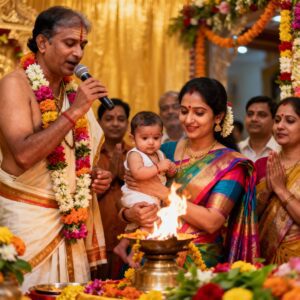
Namakarana Samskara | The Complete Guide to the Hindu Name Giving Puja Ceremony
The Namakarana Samskara, or Name Giving Puja Ceremony, is a sacred Hindu rite performed 11 to 120 days after birth. It formally bestows a spiritually-charged, astrologically-aligned name upon a child, invoking divine blessings and establishing their identity within the cosmic and social order.
Table of Contents
- Introduction: The Power of a Name
- What is the Namakarana Samskara?
- The Philosophy: Why This Puja Ceremony Matters
- Astrological Foundation of the Name Selection
- Step-by-Step: The Name Giving Puja Ceremony Rituals
- Types of Names in Hindu Tradition
- Modern Practice & Diaspora Adaptations
- Benefits & Contemporary Significance
- How to Plan a Namakarana Ceremony
- Conclusion: An Eternal Gift of Identity
- Authoritative Sources & Further Reading
Introduction: The Power of a Name {#introduction}
In the tapestry of Hindu Samskaras (sacraments), few threads are as vibrant and intentional as the Namakarana Samskara. More than a simple announcement, this profound Name Giving Puja Ceremony is a spiritual technology. It recognizes a fundamental Vedic truth: Naam (name) is not a random label but a vibrational blueprint that influences destiny, personality, and spiritual alignment.
This ancient rite, prescribed in the Grihya Sutras, ensures a child’s first identity is infused with auspiciousness. It moves beyond family preference to a holistic process involving astrology, mantra, and community blessing. In today’s global context, understanding and performing this Name Giving Puja Ceremony is a powerful way to root a child in sanatana dharma (eternal principles) from their very beginning.
“By the sacrifice of knowledge, one worships that which is the origin of the demigods, the great sages, and the natural biological order.” – Bhagavad Gita (Britannica on Veda)
What is the Namakarana Samskara? {#what-is-namakarana}
The Namakarana Samskara is the fifth of the sixteen traditional Shodasha Samskaras. It is typically performed on the 11th, 12th, or 100th day after birth, though timing can vary based on regional custom and astrological advice (Muhurta).
Core Purpose: To formally introduce the newborn to the family, community, and cosmos through a name that carries spiritual potency (Shakti). This puja ceremony sanctifies the child’s entry into social and religious life.
Key Components:
- Astrological Analysis: The child’s Janma Kundali (birth chart) is analyzed.
- Syllable Selection: Auspicious first letters are derived from the birth Nakshatra (lunar mansion).
- Ritual Declaration: The name is ceremonially whispered in the child’s ear and announced to the deities.
- Community Blessing: Family and guests collectively bless the child under their new identity.
This structured approach distinguishes the Hindu Name Giving Puja Ceremony from informal naming, emphasizing conscious creation over chance.
The Philosophy: Why This Puja Ceremony Matters {#philosophy}
Names as Cosmic Vibration (Shabda Brahman)
Hindu philosophy elevates sound to a cosmic principle Shabda Brahman. Sanskrit, considered a divine language, is built on the idea that every syllable (Akshara) has an inherent energy. The Name Giving Puja Ceremony leverages this science. The chosen name is a mantra that will be called countless times throughout the child’s life, each repetition reinforcing a specific spiritual vibration and invoking associated divine qualities.
Identity, Karma, and Destiny
The name acts as a focal point for the child’s karma and dharma. An astrologically aligned name from the Name Giving Puja Ceremony is believed to:
- Support the fulfillment of life’s purpose (Purushartha).
- Mitigate challenging planetary influences.
- Attract circumstances conducive to the name’s meaning (e.g., a name meaning “peace” fosters peaceful situations).
The ceremony thus becomes an act of aligning personal identity (Ahamkara) with cosmic law (Rta).
Astrological Foundation of the Name Selection {#astrology}
The selection process in a Namakarana Samskara is deeply scientific, not arbitrary. A qualified priest (Pandit) conducts the following analysis:
1. Birth Chart (Janma Kundali) Scrutiny:
- Janma Nakshatra: The zodiac constellation at birth is paramount. Each of the 27 Nakshatras governs specific syllables.
- Nakshatra Pada: The specific quarter of the Nakshatra further refines the choice.
- Planetary Positions: The strength and placement of planets, especially the Moon (Chandra) and the ascendant lord (Lagna Lord), are considered.
2. Deriving the Auspicious Syllable:
Based on the above, the priest determines one or more auspicious first letters (Akshara) for the name. For example, a child born under the Rohini Nakshatra might have auspicious names starting with ‘O’, ‘Va’, ‘Vi’, or ‘Vu’.
3. Name Verification and Finalization:
The family chooses a meaningful name beginning with the suggested syllable. The priest verifies its overall auspiciousness before finalizing it for the Name Giving Puja Ceremony.
Step-by-Step: The Name Giving Puja Ceremony Rituals {#rituals}
A traditional Namakarana involves several sacred steps, creating a holistic spiritual experience.
Pre-Ceremony: Purification & Sankalpa
- The venue (often home) is cleaned and sanctified.
- The priest and family begin with a Sankalpa (solemn vow), stating the intent of the Name Giving Puja Ceremony.
The Core Ritual Sequence:
- Ganesh Puja: Invoking Lord Ganesha, remover of obstacles.
- Kalasha Sthapana: Establishing a pot of sanctified water, representing the presence of all deities.
- Navagraha Puja: Worship of the nine planets to harmonize cosmic energies.
- Homa (Fire Offering): Optional but powerful. Offerings of ghee and herbs are made into the sacred fire (Agni) as the name is announced, carrying prayers to the divine.
- Name Revelation (Nama Prakashana): The priest whispers the chosen name into the baby’s right ear three times. This is the pivotal moment of the puja ceremony. It is then announced aloud to the assembled guests.
- Blessings & Prasad: Elders and guests bless the child, often by gently touching them or offering gifts. The ceremony concludes with the distribution of Prasadam (sanctified food).
Types of Names in Hindu Tradition {#name-types}
Names chosen during the Name Giving Puja Ceremony often fall into these spiritually rich categories:
- Deity-Based Names (Devata Nam): Names like Krishna, Lakshmi, Shiva, or Saraswati invoke the deity’s protection and virtues.
- Virtue-Based Names (Guna Nam): Names embodying qualities like Vivek (wisdom), Dhairya (courage), or Prema (love).
- Cosmic/Nature-Based Names: Names like Arjun (bright, shining), Vasu (divine wealth), or Dhara (earth) connect the child to universal elements.
- Historical/Legendary Names: Names of revered figures, sages (Rishis), or heroes from scriptures like the Ramayana or Mahabharata.
Modern Practice & Diaspora Adaptations {#modern-practice}
Today, the essence of the Namakarana Samskara remains, while its form adapts to contemporary life.
Key Adaptations:
- Bicultural Names: Families may choose a formal Sanskrit name for the Name Giving Puja Ceremony and a simpler, compatible name for daily use.
- Virtual Consultations: Priests can analyze birth charts and guide ceremonies remotely for families abroad.
- Streamlined Ceremonies: The core rituals are preserved while the duration may be adjusted to suit modern schedules.
- Home-Centric Celebrations: The puja ceremony is most commonly performed at home, fostering intimacy, followed by a celebratory meal.
These adaptations ensure the Name Giving Puja Ceremony stays relevant and accessible without diluting its spiritual core.
Benefits & Contemporary Significance {#benefits}
Performing a Namakarana Samskara offers timeless and modern benefits:
- Psychological Anchoring: The ritual provides a deep sense of belonging, identity, and cultural continuity for the child.
- Spiritual Protection: The name acts as a daily mantra, invoking divine grace and positive energy.
- Astrological Harmony: It aligns the child’s identity with favorable cosmic influences, as per Vedic science.
- Family & Community Bonding: The puja ceremony reinforces social bonds and collective responsibility for the child’s upbringing.
- Intentional Parenting: It marks the parents’ conscious commitment to raising the child within a framework of dharma.
How to Plan a Namakarana Ceremony {#planning}
Planning an authentic Name Giving Puja Ceremony involves a few key steps:
- Consult a Priest: Immediately after birth, provide the exact date, time, and place of birth to a knowledgeable Pandit.
- Receive Name Options: The priest will analyze the chart and suggest appropriate names and an auspicious date for the puja ceremony.
- Choose the Name: As a family, select a name from the suggestions that resonates with you.
- Prepare for the Day: Arrange the puja items, a comfortable space for the baby, and plan for guests. Simplicity focused on the ritual is key.
- Celebrate with Love: Embrace the day with devotion and joy, understanding the profound gift you are giving your child.
Conclusion: An Eternal Gift of Identity {#conclusion}
The Namakarana Samskara or Name Giving Puja Ceremony is far more than a naming ritual. It is the first and most profound act of defining a soul’s journey in this lifetime. This Name Giving Puja Ceremony weaves together the science of astrology, the power of sound, and the warmth of community blessing to create a sacred identity for the newborn.
In a world of fleeting trends, it offers an anchor in eternal wisdom. By choosing to perform this Samskara, parents bestow upon their child a name that is a blessing, a guide, and a protective force—a true foundation for a life of purpose, virtue, and spiritual growth.
Authentic guidance with a qualified Vedic priest.
Authoritative Sources & Further Reading {#sources}
- Britannica: Dharma-shastra | Sanskrit Language
- Stanford Encyclopedia of Philosophy: Indian Philosophy of Language
- Oxford Centre for Hindu Studies: Educational Resources
- JSTOR: Digital Library for Academic Journals
- Wisdom Library: Hindu Texts and Philosophy
- National Institutes of Health (PubMed Central): Research on Cultural Rituals