Homa
Understanding Hindu Puja | Vedic and Tantric Traditions in Europe
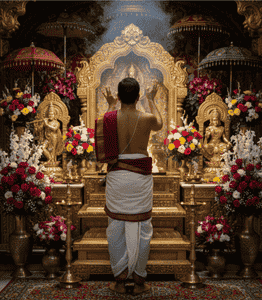
Puja | The Essence of Ancient Devotional Practice
Vedic & Tantric Approaches to Divine Puja | Communion Through Ritual & Intention
📑 Complete Guide
- 1. Understanding Devotional Practice: Core Concepts of Puja
- 2. Vedantic Philosophy of Worship on Puja
- 3. Vedic Ritual Science & Ancient Origins of Puja
- 4. Tantric Transformation: Divine Feminine & Energy
- 5. Vedic vs Tantric: Essential Distinctions of Puja
- 6. Contemporary Practice of Puja in Austria & Europe
- 7. Engaging in Puja With Authentic Devotion
- 8. Frequently Asked Questions about Puja
Understanding Devotional Practice: Core Concepts of Puja
Puja, derived from Sanskrit meaning “to worship,” represents the core devotional practice in Hinduism through which practitioners establish direct communion with divine consciousness. Far from mere ritual performance, authentic worship embodies the philosophical principles articulated in the Upanishads that the divine pervades all existence and can be approached through focused intention, sacred offerings, and inner transformation.
In Austria’s growing Hindu community, this devotional practice serves not only as spiritual engagement but as a vital link to ancestral wisdom, maintaining continuity with traditions that have guided spiritual seekers for millennia while adapting thoughtfully to contemporary European life. Whether following Vedic protocols or Tantric approaches, practitioners honor a continuous lineage of sacred worship spanning thousands of years.
🙏 Worship as Spiritual Technology
This ancient devotional system represents more than religious ceremony it functions as a comprehensive technology for consciousness transformation. Through carefully structured practice combining ritual elements, sacred sounds, visualization, and sincere intention, participants create conditions for profound spiritual awakening and alignment with cosmic principles.
Learn more: Puja – Britannica Encyclopedia
Vedantic Philosophy of Worship on Puja
The Bhagavad Gita (9.26) states that divine consciousness accepts even a leaf, flower, fruit, or water when offered with devotion, emphasizing that sincere intention surpasses material value. This principle underlies all authentic worship—the ritual’s power resides not in mechanical execution but in the consciousness and spiritual aspiration of the practitioner engaging with profound sincerity.
This devotional practice establishes what the Yoga Sutras describe as surrender to divine consciousness, creating a sanctified field where ordinary materials become vehicles for spiritual energy. Through conscious offering, practitioners transcend the illusion of separation between individual self and divine reality, experiencing what the Upanishads call recognition of essential unity with cosmic consciousness. An experienced priest guides participants toward authentic engagement rather than superficial ceremony, understanding these subtle spiritual dimensions.
✨ The Consciousness Behind Ceremony
Authentic devotion distinguishes itself from mechanical ritual performance through the quality of consciousness brought to practice. The Bhagavad Gita repeatedly emphasizes that actions performed with complete surrender and love carry transformative power regardless of their material grandeur. This principle liberates spiritual practice from dependence on elaborate external conditions, making profound engagement accessible to all sincere seekers.
Vedic Ritual Science & Ancient Origins of Puja
📜 Scriptural Foundation & Origins
Vedic worship practices originate in the four Vedas Rigveda, Samaveda, Yajurveda, and Atharvaveda composed over three millennia ago. These ancient texts represent humanity’s earliest systematic exploration of the relationship between human consciousness and cosmic forces. The Yajurveda particularly details ritual procedures, emphasizing that precise execution aligns human action with universal order (Rta).
Unlike later devotional movements, Vedic practice understands deities not as separate entities but as principles governing natural and spiritual domains. Agni represents transformation; Indra embodies strength and clarity; Varuna maintains cosmic law. Worship acknowledges humanity’s interdependence with natural principles and seeks harmonious alignment with them.
Learn more: Vedas – Britannica Encyclopedia
🔥 Sacred Fire Ritual: Yajna
Central to Vedic devotion is Yajna offerings rendered into sacred fire. The Bhagavad Gita (3.14-15) describes how existence itself emerged from Yajna and is sustained through it, recognizing that conscious sacrifice offering one’s limited ego to universal consciousness underlies all spiritual progress.
In this ancient practice, Agni serves as messenger between human and divine realms. Offerings transformed by fire ascend as subtle energy, while the fire’s blessing descends as divine grace. This bidirectional flow represents the fundamental principle of spiritual exchange giving and receiving that maintains cosmic balance and creates conditions for transformation.
⚖️ Ritual Precision & Cosmic Alignment
Vedic devotion emphasizes meticulous ritual execution, but this precision serves deeper purpose. The Mimamsa philosophy explains that correct performance establishes resonance with cosmic patterns. Just as musical instruments must be precisely tuned to create harmony, ritual elements must align correctly to establish the intended spiritual effect.
However, the Brihadaranyaka Upanishad clarifies that ritual alone cannot produce ultimate liberation. This ancient practice serves as preparation purifying consciousness and establishing discipline but must eventually yield to direct knowledge of one’s essential divine nature.
Tantric Approach: Divine Feminine & Transformation
🌟 Philosophical Foundations of Tantric Tradition
Tantra emerged around the 6th century CE, offering a radical reinterpretation of spiritual practice. While Vedic tradition often emphasized transcendence of material existence, Tantric philosophy proposes that the material world itself is a manifestation of divine consciousness (Shakti). Therefore, spiritual practice should engage directly with material reality, transforming rather than escaping it.
The Kashmir Shaivism tradition represents one of Tantra’s philosophical peaks, teaching that consciousness (Shiva) and energy (Shakti) are inseparable aspects of one reality. This devotional approach works with this understanding, utilizing material elements, visualization, and energy practices to awaken dormant spiritual potential (Kundalini).
Learn more: Tantra – Britannica Encyclopedia
👑 The Divine Feminine: Shakti in Worship
This mystical approach emphasizes Shakti the dynamic, creative aspect of divinity often represented as the Divine Mother. Unlike the more patriarchal structure of Vedic ritual, Tantric devotion acknowledges the feminine principle as primary. Deities like Kali and Durga represent not merely power but the transformative force that destroys limitation and ignorance, revealing underlying truth.
This emphasis reflects Tantra’s core recognition: true spiritual power lies in embracing and transforming all aspects of existence rather than rejecting what seems impure or limiting. This approach profoundly impacts how practitioners relate to their own bodies, emotions, and desires—transforming potential obstacles into vehicles for spiritual awakening and enlightenment.
🔄 Ritual Flexibility & Personalized Practice
While Vedic devotion follows established protocols, Tantric practice allows significant adaptation based on the practitioner’s constitution, spiritual maturity, and guidance from a qualified teacher (Guru). The Tantras themselves state that what purifies one practitioner may not suit another, emphasizing individualized spiritual practice (Sadhana).
This flexibility extends to the use of unconventional elements in ritual. Some Tantric traditions employ what would be forbidden in orthodox Vedic practice, deliberately transgressing social norms to transcend dualistic thinking. However, such practices require proper context and guidance; misunderstood or misapplied, they lead to confusion rather than liberation.
🕉️ Mantra, Yantra & Inner Visualization
This mystical system employs three primary technologies: mantra (sacred sound), yantra (sacred geometry), and inner visualization. Together, these establish a multidimensional field of consciousness. Mantras are not merely prayers but sound-formulas believed to directly affect consciousness at subtle levels. The specific phonemes and rhythms create resonance patterns awakening dormant aspects of awareness.
Yantras provide visual focal points representing cosmic principles in geometric form. Meditation on these sacred forms reorganizes mental patterns, creating alignment with universal structures. Inner visualization develops the capacity to perceive subtle realities beyond ordinary sensory experience, training consciousness to recognize its own creative power.
Vedic vs Tantric: Essential Distinctions of Puja
| Aspect | Vedic Approach | Tantric Approach |
|---|---|---|
| Ritual Structure | Precisely defined procedures from ancient texts | Adaptation based on circumstance and maturity |
| Understanding of Divinity | Distinction between worshiper and divine | Ultimate dissolution of separation |
| Practice Focus | Collective participation and social cohesion | Individual transformation and direct experience |
| Primary Objective | Blessings for prosperity, health, harmony | Liberation through direct realization |
Both traditions offer complementary pathways to spiritual realization, speaking to different temperaments and stages of spiritual maturity while maintaining Hinduism’s essential teachings on consciousness and its relationship to ultimate reality.
Contemporary Practice of Puja in Croatia, Germany, Austria & Europe
The Hindu community maintains these ancient traditions while adapting thoughtfully to European life. Temples and cultural organizations provide spaces for traditional worship, celebrating festivals like Diwali, Navaratri, and Mahashivaratri with full ceremonial authenticity. This preservation of tradition in diaspora serves multiple essential purposes.
For Hindu families, this devotional practice maintains connection to ancestral wisdom, transmitting spiritual values to children growing up in a different cultural context. For broader Austrian society, these practices offer windows into profound philosophical traditions addressing universal human concerns meaning, purpose, and transcendence. The practice of this ancient worship in Austria exemplifies how authentic spirituality transcends geographical and cultural boundaries, with principles of conscious intention, reverence for existence, and consciousness transformation speaking to fundamental human aspirations transcending borders.
🌍 Discovering Authentic Practice
Explore comprehensive Puja Services offered throughout Austria with authentic Vedic and Tantric methodology.
Engaging With Authentic Practice
Those interested in experiencing this devotional tradition can connect with Hindu temples and cultural centers throughout Austria. Many organizations welcome sincere seekers regardless of background, offering explanations of rituals and their spiritual significance. For those considering personal practice, guidance from an experienced teacher proves invaluable, especially when exploring Tantric dimensions involving subtle spiritual principles that textual study alone cannot convey.
A qualified guide ensures proper understanding and avoids common misconceptions, allowing practitioners to engage with full spiritual efficacy and authentic depth. Discover Vedic Consulting Services for personalized guidance in your spiritual journey.
Frequently Asked Questions about Puja
What is the essential purpose of this ancient practice?
According to Vedantic philosophy, the ultimate purpose is establishing conscious relationship with divine reality. While practitioners may seek specific blessings or benefits, the deeper function involves transforming ordinary consciousness into recognition of its essential divine nature through devoted practice.
Can Vedic and Tantric elements be combined?
Yes. Many contemporary practitioners thoughtfully integrate elements from both traditions. The key is maintaining philosophical coherence and sincere intention. Some aspects combine naturally, while others require careful consideration to avoid contradiction or spiritual confusion.
What role does this practice play in spiritual liberation?
The Bhagavad Gita teaches that when performed as offering without attachment to results, this devotion purifies consciousness and prepares it for higher knowledge. While it alone does not produce ultimate liberation, it establishes the essential foundation—mental clarity, devotional intensity, ethical discipline upon which liberating knowledge arises.
Why do some traditions include unconventional practices?
Certain Tantric schools deliberately employ elements considered unconventional or forbidden. The philosophical rationale is that liberation requires transcending all dualistic categorization pure versus impure, sacred versus profane. Advanced practitioners transcend limiting mental patterns by consciously engaging what society typically rejects. However, such practice requires proper context, preparation, and guidance from experienced teachers.
How can this devotion benefit modern life?
Authentic practice cultivates qualities essential for meaningful contemporary existence: focused attention, reverence for life, recognition of interconnections, and inner peace. Regular engagement creates psychological stability and spiritual depth that inform all aspects of daily living and relationships.
Where can I learn more about these traditions?
Qualified teachers and authentic temples throughout Austria provide guidance suited to different spiritual interests and maturity levels. Beginning with basic instruction ensures proper foundation for deeper engagement with these profound traditions and spiritual practices.
📚 Authoritative Resources for Further Study
Deepen your understanding of this ancient practice and Hindu philosophy through these authoritative academic resources:
🔗 Britannica Encyclopedia:
Puja – Hindu Worship |
Vedic Literature |
Vedic Religion |
Hindu Practice
🎓 Educational Institutions:
American Institute of Vedic Studies |
Oxford Centre for Hindu Studies |
Vedic Science Resources
📖 Academic Philosophy:
✨ The Complementary Path to Divine Reality
Vedic and Tantric approaches represent complementary pathways to divine reality—one emphasizing ritual precision and cosmic order, the other personal transformation and direct experience. Both traditions offer profound resources for spiritual development, speaking to different temperaments and stages of spiritual maturity while maintaining Hinduism’s essential teachings.
Whether drawn toward the structured precision of Vedic practice or the transformative intensity of Tantric approaches, sincere seekers find in this devotional tradition a vehicle for profound spiritual engagement one that honors thousands of years of accumulated wisdom while addressing the deepest aspirations of the human spirit seeking truth, meaning, and communion with the divine.
🌐 Website: Pandit Sahadev | Hindu Seva
📍 Location: Pula, Croatia | Online Consultations Available Worldwide
Services available in Croatian, English, Hindi, and German. Guidance conducted with traditional methodology ensuring authenticity, spiritual depth, and transformative power for sincere practitioners.